Organic is a labeling term that indicates that the food or other agricultural product has been produced through approved methods. These methods integrate cultural, biological, and mechanical practices that foster cycling of resources, promote ecological balance, and conserve biodiversity. Synthetic fertilizers, sewage sludge, irradiation, and genetic engineering may not be used.”
ams.usda.gov
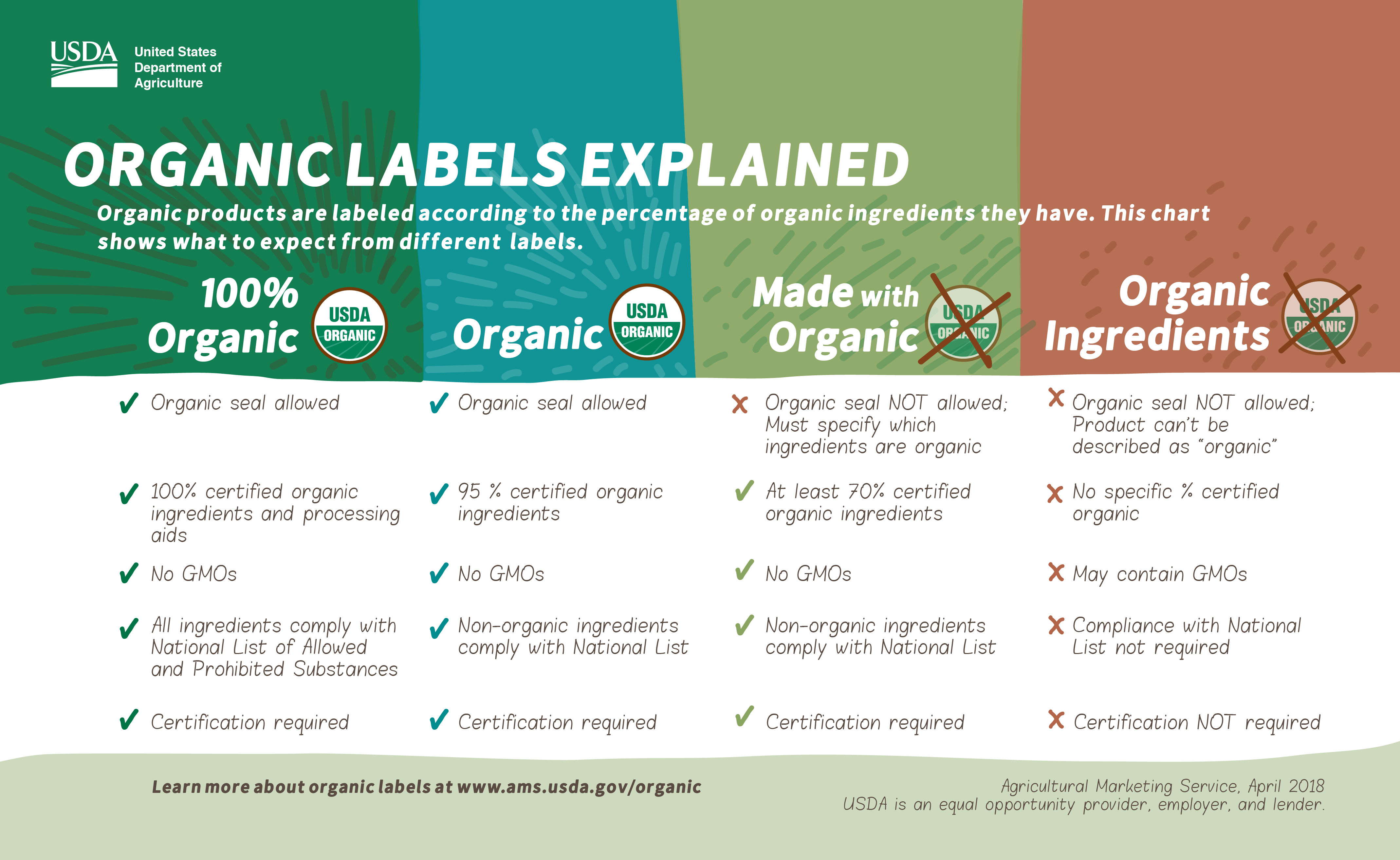
The organic label is one of the only production related labels approved and regulated by the USDA. However, only the green and white USDA organic seal signifies that a product has meet the USDA requirements of an organic product. If a product states it is organic but does not contain this seal, it is not approved by the USDA. The graphic below explains the difference between organic labels.
USDA organic products indicate that the product has been grown using only approved substances, in a way that conserves biodiversity and protects natural resources. Genetically modified crops are not an approved substance to be used in organic agriculture. Organic farms raising livestock are not permitted to use antibiotics or growth hormones for any reason. If an animal becomes ill and requires antibiotics, it can no longer contribute to the organic food supply even after a withdrawal period. Organic livestock must also meet a set of welfare standards. Like commercially raised livestock, organic livestock must have access to clean water, fresh air, shelter, space to move, and clean, dry bedding. Unlike conventionally raised livestock, organic livestock is required to have year-round access to the outdoors. However, it is important to note that many conventional farms also provide year round access to the outdoors for their animals.

For more information about organic agriculture, check out the link below:
 Molly Siskovic